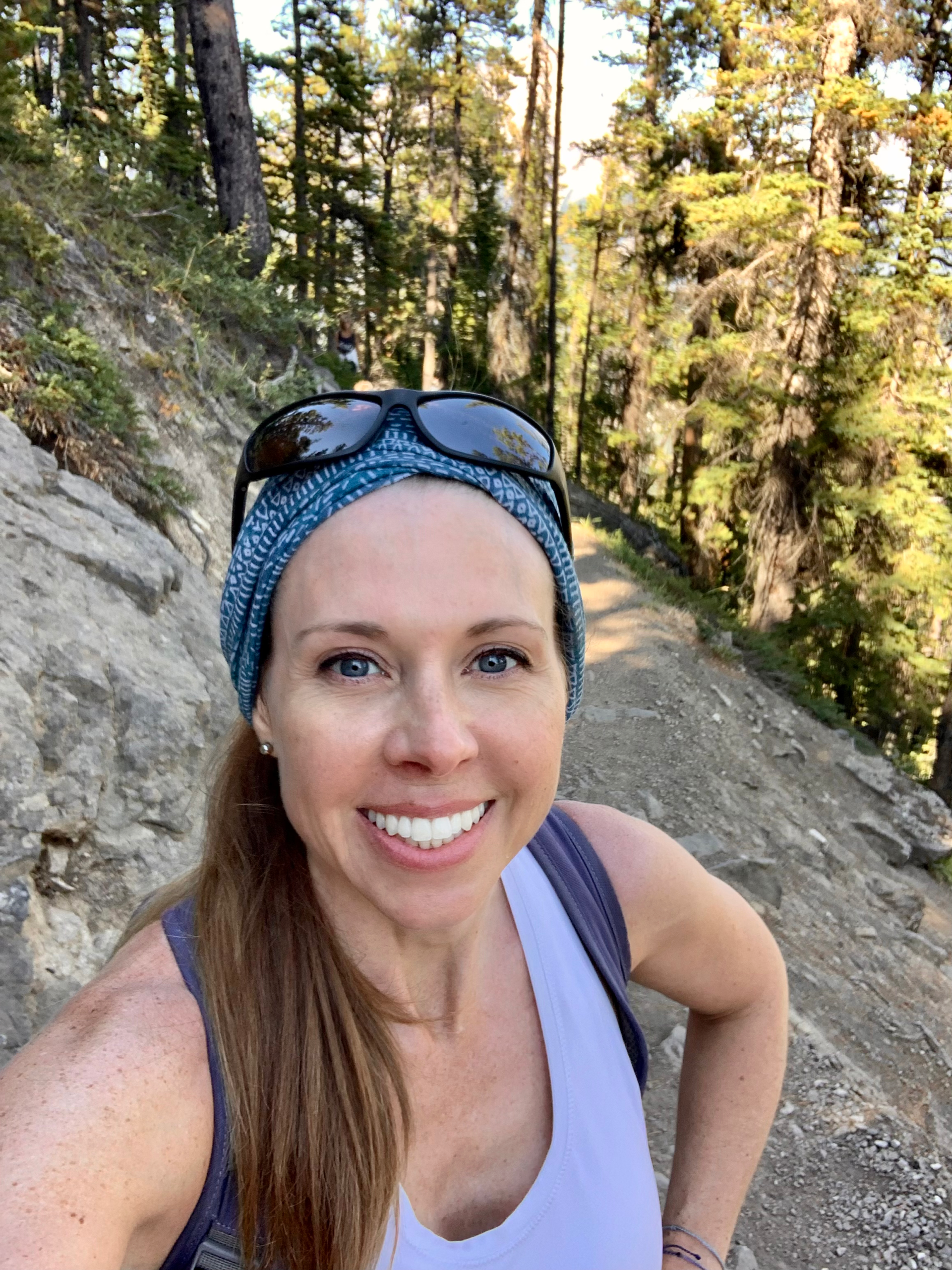
Women in midlife commonly navigate challenges like menopause symptoms, identity loss, empty nest transitions, gray divorce, aging parent responsibilities, and declining earnings. Intentional travel, planned with reflection in mind rather than pure leisure, can help women process these transitions.
Somewhere between your late 30s and your mid-60s, life starts to shift. Not just one thing, of course. More like “everything everywhere all at once.” Your body. Your career. Your kids. Your parents. Your relationship. The version of yourself you thought you knew.
Let’s be honest. We women in midlife are navigating a lot. Research consistently shows that this period, roughly ages 35 to 65, brings up a pile of physical, emotional, social, and professional changes, all at the same time. And our world doesn’t seem to make space for any of it. Great.
But here’s what I also know: this can be the beginning of something beautiful, and travel can play a bigger role than you might think.
Let’s talk about some of the specific challenges women face in midlife, and how intentional travel can help you work through each one.
Challenge 1: Your body is doing a lot right now
We’re going to start with the physical one, because it affects everything else.
Perimenopause, the transition leading up to menopause, can start as early as your late 30s and last anywhere from two to eight years. There’s hot flashes, night sweats, sleep problems, joint pain, brain fog, weight changes, a sex drive that goes up or down without warning. Then there’s the mood shifts, vaginal dryness, irregular periods, and that strange, disconcerting feeling that your brain is working differently than it used to. What a fun fest.
One symptom tends to trigger another. You’ve got night sweats wrecking your sleep, and poor sleep makes the brain fog worse. The fog makes work harder, and harder work makes stress worse. Stress can intensify hot flashes, and here we go again. It’s a vicious cycle, and it can feel relentless.
And yet most of us weren’t prepared for any of this. Health education around midlife women has historically been under-resourced and underfunded. So, we’ve got a lot of women who walk into their 40s and 50s feeling blindsided.
How travel can help
- Stress makes almost all of perimenopause and menopause symptoms worse. Cortisol can trigger hot flashes, swell bellies, wreck sleep, and amplify anxiety. So, anything that lowers your stress load is doing some real work.
- Sleep-destroying symptoms don’t exactly make not sleeping in your own bed sound appealing, but hear me out. You might be surprised to find you sleep better on an intentionally planned trip than you have in months, even years.
- Travel usually involves a lot of movement that doesn’t feel like exercise. Walking, swimming, biking, hiking — that kind of low-pressure physical activity is good for joint pain, mood, and energy.
- There’s a whole world of options designed around exactly what your body needs. We’ve got thermal baths in Iceland or Hungary. Coastal towns built around walking and fresh food. Wellness retreats focused on sleep and nervous system recovery. The list goes on. I’m not saying plan a trip around, “Well, here come my hot flashes again. Time to get on a plane.” But let your symptoms guide where you go and what you do when you get there.

Related Read

Related Read
Challenge 2: The identity question nobody prepares you for
Here’s something I read once and still think about: women spend a lot of their lives giving away little pieces of themselves. To their kids. To their careers. To their friends in need. To their partners. To their parents. To whoever needs something at that particular moment.
By midlife, many women look up and realize they’re not quite sure who they are outside of what they do for other people, and research agrees.
Women going through the menopausal transition often report a profound re-evaluation of identity: a sense of not feeling like themselves anymore, or a fear that they’re losing something they can’t quite name. Society doesn’t help. Menopause is still treated like a punchline in a lot of spaces, or dismissed as “just part of aging,” which means many women internalize it as something shameful or weak rather than simply human.
The term is “gendered ageism.” It’s the discrimination that happens at the intersection of being a woman and getting older. It shows up in how women are spoken to, what jobs they’re considered for, and the messages they absorb about their own value. And it takes a real toll on self-worth.
Midlife can also be an intense time emotionally. Depression is more common during perimenopause than at any other life stage. Anxiety increases, too. Add the pressure of managing families, careers, and aging parents all at once, and it’s a lot.
How travel can help
- Nobody knows you as the frazzled mom or stressed employee. You’re just a person sitting and journaling at a café in a city where no one has any expectations of you. That anonymity is powerful.
- Without your usual roles to fill, you start making small decisions purely for yourself, like where to eat or how long to linger. You also tend to encounter things that spark something inside you, like a piece of art or stunning vista. Pay attention to those moments because they’re telling you something about who you are when nobody’s asking anything of you.
- You get to pay attention to the things that spark something. A piece of art that stops you cold. A view that takes your breath away. Those moments aren’t just nice memories. They’re telling you something about who you are when nobody’s asking anything of you.
- Solo travel has a way of rebuilding confidence in women who’ve spent years operating as part of a unit. It forces you to navigate, make decisions, and handle the unexpected on your own. Going through that process can remind you that you’re pretty capable on your own terms.
- That said, traveling alone as a woman isn’t for everyone, and that’s OK. I get it. A good compromise is joining a women-only guided trip by yourself. You get the experience of being somewhere new amongst strangers and without a predetermined role, minus the stress of being alone.

Related Read

Challenge 3: The empty nest, the boomerang kids, and everything in between
Nearly half of adults over 50 are empty nesters. And the expectation is that you’ll feel free.
Sometimes that’s true. Many parents adjust faster than they expected, enjoying more time for themselves and a reconnection with their partners. But for a lot of women, especially those who built their identity around motherhood, it hits differently.
Then there’s the other reality: kids who don’t leave, or who leave and come back. “Prolonged parenthood” is increasingly the norm. Thanks to our smartphones, parents now have more contact with their adult children than any previous generation. Nearly half have daily contact, and they’re providing significant financial support on top of it. So instead of a clean empty nest, many midlife women find themselves in an extended parenting role that’s emotionally and financially draining in its own right.
For marriage, the empty nest is a turning point for a lot of couples. Some use it to reconnect. Others discover that what held them together was the busyness of raising kids, and now that the busyness is gone, the problems are visible. “Gray divorce,” or divorce after 50, has doubled in the last two decades, even while overall divorce rates have gone down.
Meanwhile, many of these same women are also starting to care for aging parents. The “club sandwich” generation: caught between helping their kids and supporting their parents at the same time. It’s an enormous amount of work, and it usually comes at the expense of everything else.
How travel can help
- If your kids just left home, it can feel strange to have periods of time with nobody asking anything of you. A trip puts you in that situation on purpose. It sounds like pure bliss, but if you’ve spent decades orienting your schedule around tiny humans, it can be disorienting at first. Stick with it.
- If your sweet angels haven’t fully launched yet, a little distance can be a good thing. Plus, you’ve got a live-in house sitter and pet sitter at the ready.
- For couples trying to find each other again after the kids leave, a change of scenery does something that another night on the couch doesn’t. You’re cooperating on new logistics, noticing new things, talking about what’s in front of you instead of rehashing the same household friction.
- And for you caregivers out there, please hear this: a break is not abandonment; it’s sustainability. You cannot pour from empty, and time away is one of the few things that genuinely fills something back up.
Challenge 4: Career crossroads and the money reality
Women’s earnings tend to peak in their early-to-mid 40s. Men’s peak later and hold for longer. By the time a woman is in her late 50s, she’s typically earning less than she was at her highest point. Thank you ageism, career gaps from caregiving, and workplace discrimination that’s been lying in wait.
There’s even a term for it: the “menopause penalty.” Women in their late 40s and 50s are sometimes passed over for promotions or quietly pushed out of jobs, with their reduced “energy” cited as the reason. And this can be despite strong performance records. Older women are also the group least likely to seek new jobs, in part because they know age discrimination makes it a riskier bet.
On top of all that, women live longer than men, typically by more than five years, which means they need more savings to fund retirement. They may also pay up to $200,000 more in health insurance premiums over their lifetimes. And for women who divorce later in life, the financial hit is steep. Research shows women experience about a 45% drop in standard of living after gray divorce, compared to 21% for men.

No wonder a lot of midlife women arrive at their 40s or 50s feeling burned out but uncertain about what comes next. They’ve either spent decades building expertise in something that no longer feels meaningful, or they want to pivot but don’t know where to start.
How travel can help
- Travel doesn’t necessarily fix burnout, but it does force you to get off the treadmill. A fatigued frame of mind is a terrible place to make a career decision. When you’re exhausted and resentful and running on fumes, everything looks like a dead end.
- You give yourself an opportunity to spend time around people who’ve structured their lives differently. Maybe you meet a woman at a cooking class in Bologna who left a finance career in her 50s to open a small inn. Or, maybe you talk with someone on a hiking trail who consults part-time and spends the rest of her time exploring the outdoors. These encounters can inspire and help chip away at the assumption that the way you’ve been living is the only way.
- It’s a way to understand what you need versus what you’ve been conditioned to want. When you’re living on the go and out of a suitcase for a week or two, your sense of “enough” tends to recalibrate. That matters when you’re trying to figure out something like whether a lower-paying pivot is actually viable, or whether the financial fear is bigger than the financial reality.
- An intentional trip puts your skills in a new context. Look at you planning and adapting, navigating unfamiliar cities, solving problems on the fly, and communicating across language barriers. Women who’ve spent years feeling underutilized or overlooked at work often come home from a trip with a different read on what they’re truly capable of.

Related Read
You don’t have to figure it all out
Midlife is a transition to move through, not suffer through. And transitions, the good ones anyway, require a certain amount of not-knowing before you get to understanding.
The research on life transitions uses a concept called the “Neutral Zone.” It’s that in-between place where you’re no longer who you used to be, but you haven’t quite become who you’re going to be next. It’s uncomfortable, which is why most people try to rush through it or pretend it isn’t happening. Travel can give you a different relationship with Neutral Zone. It provides a unique place to sit with the discomfort instead of numbing it.
If you’re facing any of the challenges of midlife, I’d encourage you to think about planning your next vacation with purpose and intention. This new chapter deserves new focus, you just need to get started.