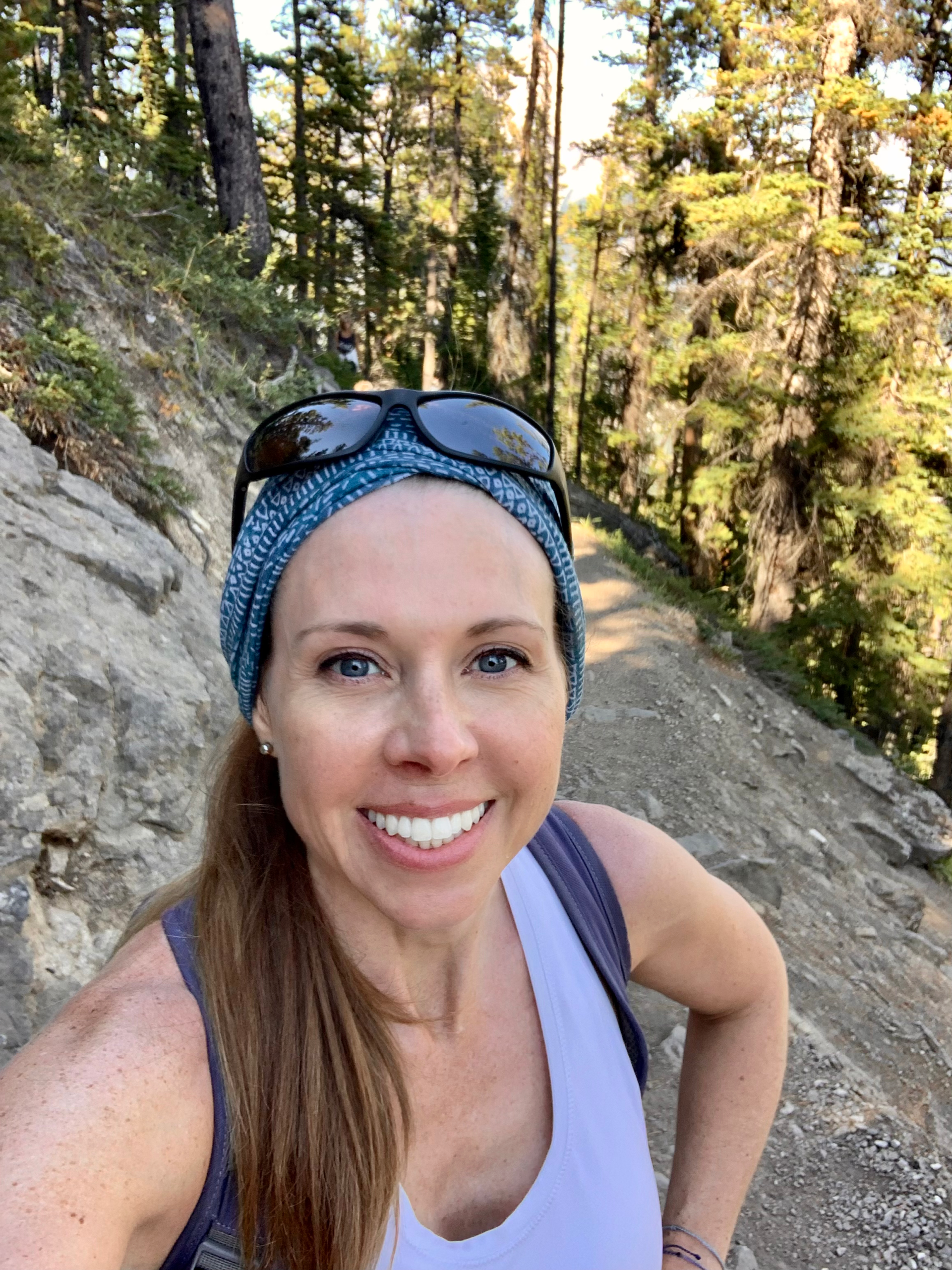
Career questioning for women is often driven by life-stage shifts and accumulated self-knowledge. Identity based on what you do for a living is deeply embedded in self-image, social introduction, and daily structure, making it harder to examine from inside normal life. Intentional travel based on career crossroads questions removes professional context and creates conditions for honest reflection.
Is this still what you want, or just what you’re used to?
I don’t know how many people around my age I’ve talked with — men and women both — who are questioning careers right now. Part of it is all this AI stuff and how we should’ve all gone to trade school to become plumbers or whatever, but I think part of it’s also the life stage we’re in.
We decide “what we want to be when we grow up” early. Those choices are shaped by interest, aptitude, opportunity, and whatever happened to be available at the time. You settle on a path and keep walking it as the years stack up. But enough years in, with some distance from that original decision, you start to wonder if the path you picked still fits.
And, why not make it even harder on yourself? Thoughts and inner dialogue swirl around the sunk cost pressure (“you’ve worked too hard to walk away”), the fear of starting over, and the annoying little voice telling you that wanting something different is no only impractical, it’s downright selfish. Awesome.
Let’s pause for a second and define a career “change” versus “pivot.” A career change means starting over from scratch — completely new industry, skillset, or role. A pivot keeps what’s working for you and redirects what isn’t. Most women probably land somewhere in the middle. Something’s feeling more “meh” than normal, but you’re not sure what.
Signs of career imbalance
01
You’ve achieved stability but feel restless or uninspired.
02
Your work no longer reflects your interests or values.
03
You sense it’s time for change but aren’t sure what direction to take or think it’s too late at your age.
04
Despite being busy, you feel unfulfilled at the end of the day.
05
You’re craving creativity and space to imagine new possibilities.
06
You want to define success on your own terms again.
When you think about it, changing what you do is more challenging than changing who you are. Deciding to become a “gym person” is, in some ways, much easier than deciding to switch career paths. But there’s a point where you have enough self-knowledge to ask the question honestly (maybe for the first time) and enough runway left to do something about the answer.
Turning your next getaway into a career and work life reevaluation
A current career identity isn’t an easy one to give up, so acknowledge that. I mean, just think about how long it’s been a major part of in how you introduce yourself, how your family and the world sees you — even how you structure your daily life.
Taking an intentional trip removes all of that context. Nobody at that small guesthouse in the Alps knows your title or your tenure (nor do they care). You’re not the senior manager or the department head or the Jill of all trades holding it all together. You’re just you. Being someplace different allows you to take a break from the grind and creates space to think about this big decision.
Before you go
Time to do a little prep work. In between booking structured thinking before you leave means you’ll arrive with something concrete to work with, instead of spending half the time just decompressing.
- Conduct an honest energy audit of the past year. Go month by month and ask: what drained me, and what didn’t? What did I avoid, and what did I find myself doing even when I didn’t have to? This is a good way to notice patterns and collect evidence.
- Talk to two or three people who know your work well and ask them what they think you’re good at. What have they noticed about what lights you up instead of drains you? They can help you look for patterns that you might be too close to see yourself.
- Write down what you’d need work to give you that it currently doesn’t. Get specific. More autonomy? Problems that feel harder to solve? Work that connects to people more directly? Something that makes a difference in the world or aligns better with your values? Having this list in front of you while you’re away gives you something concrete to pressure-test.
- Identify a few questions you’ve been avoiding. C’mon — you know what I’m talking about. Stuff like, “is this still what I want, or just what I’m good at?” or “am I staying because this is right, or because leaving feels too complicated?” Write them down before you leave so they’re sitting on the page and not circling in your head.
- Look at your calendar from the past six months and notice where your discretionary time went. What did you say yes to when you didn’t have to?
Career crossroads travel destination ideas

Matera, Italy
Stone city carved into cliffs with a history of reinvention, making it ideal for thinking about starting over without erasing what came before.

Ghent, Belgium
Medieval guild city turned creative hub, where old infrastructure keeps getting rewired for new purpose.

Isle of Bute, Scotland
Island town known for attracting Victorian artists and writers who needed to step out of their regular lives to figure out what came next.

Plovdiv, Bulgaria
One of Europe’s oldest cities and a recent European Capital of Culture that has a way of making reinvention feel less radical.
While you’re there
You don’t need to spend every moment in deep reflection. You’re in a beautiful, exciting new place! But you do need to protect some time for it. The activities below work best when you treat them as the main reason you’re there, not something you’ll get to if there’s time.
- Give yourself one day with no agenda and follow your attention. Spend a day where you go where you feel like going and stop when something interests you. What you gravitate toward could be key data.
- Book a hands-on workshop with a local maker or artist. Make sure it’s something hands-on or creative that has nothing to do with your job. Notice how that feels compared to how your work usually feels.
- If there’s an opportunity to contribute your professional skills to a local effort, take it. (Note that this will require some research ahead of time.) Utilizing your knowledge in a different context can reveal which parts of your expertise are still interesting to you.
- Keep a field journal for your professional curiosity. When something catches your attention, write down what it was and why you think it did. After a few days, read back through it and see if anything surprises you.
- Find a space to focus on the questions and reflections you identified before you left. This is where structured journaling comes in. You don’t just want to free write, because you run the risk of just looping your current thinking. Have your notes and some prompts ready.
When you get back
This part matters as much as the trip itself. The biggest risk is letting all that clarity and insight fade in the face of a full inbox and return to routine takes over.
- Write a “what I know now” summary within the first few days of being home. That’s it — just some notes on what surfaced and what shifted. Which questions feel more settled than they did before you left?
- Create a non-negotiables list and look at it against your current job. See how it stacks up now that you’ve had some distance.
- Pick one small thing to explore, not change. Have a conversation with someone whose work intrigues you, take a class, or join in on a volunteer project. It just needs to be something low-stakes and directionally honest.
- If what surfaced points toward something significant, start low and slow. If what surfaced points toward something significant, you don’t have to leap. Some of the most successful career pivots are built slowly through things like side hustles before anything official changes.
- Find one person to tell. If you need to, explain that you’re not looking for advice, you just want to make it real. Saying out loud what you’re thinking to someone you trust is one of the simplest ways to keep the momentum from slowly disappearing.
Face it: being stuck in the M–F, 9–5 loop isn’t providing the conditions to trust what you already know. An intentional trip planned around career crossroads questions isn’t going to manufacture clarity or suddenly illuminate your path, of course. But what it does do is remove you from the environment that’s distracting you. You can’t think about your next step while facing the Sunday Scaries or yet another meeting that could’ve been an email. New surroundings, a slower pace, no one expecting anything from you — the right conditions might be all that’s been standing between you and knowing what you want to do next.