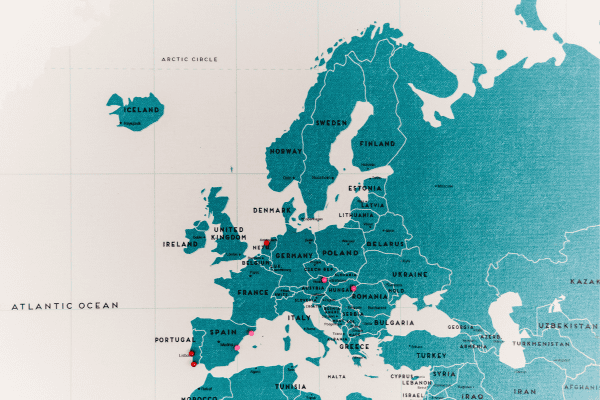
Europe offers more than 25 destinations well suited to women navigating one of seven common life transitions: questioning identity and purpose, navigating the empty nest, moving through a relationship shift, facing health challenges, navigating a career crossroads, carrying loss or caregiving weight, and managing a financial transition.
At a glance
Identity and purpose
Empty nest
Relationship shift
Health and renewal
Career crossroads
Loss or caregiving
Financial transition
There are 44 countries in Europe and approximately 4,000 Pinterest boards telling you to go to Croatia. Meanwhile, there’s your cruise-loving friend telling you being crammed on a big boat with a zillion other people is the only way to see the Mediterranean. And let’s not forget all the Instagram influencers telling you Monaco is really the only place worth considering this year.
Deep breath.
As a travel coach, I’m here to remind you that the real issue isn’t the where, it’s the why behind it. It’s thinking about what you really need from a European vacation now, and finding the place that delivers it.
When your life is in flux, you need more from a trip than a beautiful backdrop. There are specific constraints, questions, and logistics that a generic “best of Europe” list isn’t built to account for. This post works through those specifics, so by the end you’ll have a clearer sense of where in Europe to go based on where you are right now.
How to use this guide
If you’re reading this, my guess is you’re in the middle of some kind of life pivot — a career change, life purpose questioning, caregiving to aging parents, an empty nest, a financial transition, or a relationship status change. You’re navigating change and need a pause.
More than 25 cities, islands, coastlines, and regions are covered here, organized by life stage rather than geography. Each one was chosen because it fits something specific about what you might be facing, and covers a few highlights and tips for female travelers (especially solo ones) that are helpful to know.
With my recommendations, I always try to be as sensitive as possible to the overtourism that’s plaguing Europe. So, a lot of these are going to be destinations you may have never heard of. All I ask is that you keep an open mind and learn more about what each one offers. There are plenty of off the beaten path places just waiting for you to discover their magic.
Find the life moment that resonates most (or most right now) and explore the ideas in that section. Note that more than one may apply, and that’s fine.
If you’re questioning identity and purpose
Reevaluating meaning, chasing long-delayed dreams, exploring spirituality or creativity
Delphi, Greece

The ancient Greeks came here to ask the big questions. The inscription “Know thyself” is attributed to this site. The altitude coupled with the historical weight gives you space for serious reflection without feeling overly-somber.
Highlights
- One of the most dramatically situated ancient sites in Europe, perched high in the mountains above the Gulf of Corinth
- Home to the Temple of Apollo, the Sacred Way, the ancient theatre, and a stadium that once held 6,500 spectators
- The Delphi Archaeological Museum houses the Charioteer of Delphi, one of the finest surviving bronze sculptures from antiquity
Notes for female travelers
Delphi is a small, safe town and very comfortable for solo travelers. Staying overnight means you can be at the site early before tour groups arrive — worth considering. The site involves a fair amount of uphill walking on uneven stone, so comfortable shoes are a must.
Camino de Santiago, Spain (or alternates)

An obvious choice, and for good reason. The Camino is a well-marked medieval route with clear stages and simple lodging. Walking for miles a day, just to reach your next point on the trail, leaves a lot of room for the kind of thinking your everyday life doesn’t leave room for.
Highlights
- Hundreds of years of pilgrimage history built into the trail itself, visible in the waymarks, the villages, and the people you meet
- The routes pass through genuinely varied landscapes, from the meseta plateau on the Francés to the dramatic coastal cliffs of the Norte
- Arriving in Santiago de Compostela and attending the Pilgrim Mass is an experience that hits hard whether you’re religious or not
Notes for female travelers
Solo female walkers are common on all the main routes, and the albergue system builds community fast. The less-trafficked routes like the Primitivo and the Norte mean more solitude but fewer people around if you’re walking after dark or in isolated stretches. Research lighting and cell coverage for your specific route before you go.
Skellig Michael, Ireland

This rugged island known for its seabird colonies and early monastic life, where purpose was clear and defined. The early Christian monks who chose to live on a rock in the desolate, windswept North Atlantic were seeking one thing: a way to get closer to God. You don’t have to share their theology to understand the impulse of reaching for something bigger than yourself during a moment of your own searching.
Highlights
- Skellig Michael’s 6th-century beehive huts have survived on a sea stack in the North Atlantic for over 1,400 years, largely intact
- The island’s gannet and puffin colonies make it one of the most remarkable wildlife sites in Western Europe
- The Iveragh Peninsula surrounding it is stunning in its own right, with mountain passes, hidden beaches, and small fishing villages that haven’t been overrun
Notes for female travelers
The peninsula is very safe and welcoming for solo travelers. Staying somewhere along this stretch of the Wild Atlantic Way (particularly around Ballinskelligs or Waterville) puts you in one of the most remote, elemental corners of Ireland. For Skellig Michael specifically, the climb is steep and exposed with no guardrails, so factor in your comfort level with heights before booking. Boats depart from Portmagee and Ballinskelligs. The island is not accessible for people with mobility limitations. Book your boat trip as far in advance as possible (the season usually runs May–September) since permits are limited.
Assisi, Italy

Francis of Assisi walked away from wealth and a mapped-out life in his late twenties to figure out what truly mattered to him. Even though you’re at a different life stage than he was, his story still resonates because of that same pull. Regardless of your religious background, there’s no denying the quiet yet profound effect this special place has on a soul. And of course, the vistas of Umbrian hills in every direction alone are worth the trip.
Highlights
- The Basilica of San Francesco contains Giotto’s celebrated fresco cycle, considered a turning point in Western art history
- The medieval town is remarkably well preserved and genuinely beautiful, not just historically significant
- Eremo delle Carceri, the forest hermitage where Francis retreated to pray, sits above the town and feels completely removed from it
Notes for female travelers
Assisi is an easy and very comfortable destination for solo female travelers. It’s small, walkable, and has been welcoming pilgrims and independent visitors for 800 years. Dress modestly for the basilica (shoulders and knees covered). It’s popular in summer, so consider visiting in shoulder season for a calmer experience. Perugia is 30 minutes away if you want a larger city nearby.

If you’re navigating the empty nest
Children leaving home, shifting family identity, reclaiming yourself
Dordogne, France

When was the last time you lingered over a meal, mama? If you’ve spent years (and years) of your life running a household around everyone else’s schedules, the Dordogne only asks two things of you while you’re there: wander around and eat well. It’s the ideal place to exhale, slow down, and do a whole lot of nothing — you’ve earned it!
Highlights
- One of the most beautiful river valleys in France, with medieval châteaux, limestone cliffs, and quaint villages
- The prehistoric cave paintings at Lascaux (via the replica site Lascaux IV) are awe-inspiring
- The food and markets here are among the best in France, with duck, walnuts, truffles, and Bergerac wine as the local staples
Notes for female travelers
The Dordogne is very safe and welcoming for solo travelers. A car is pretty much required to see the region properly, so factor that into your planning (driving is on the right). The villages are small and locals appreciate any attempt at French, however minimal. As soon as you walk in to a shop or restaurant, be sure to greet proprietors with a friendly, “Bonjour!” To really win them over, ask them in French if they speak English before launching into a conversation. (“Parlez-vous anglais?”)
Nerja, Spain

I love Nerja. It’s an easy and enjoyable getaway when life becomes structurally simpler but emotionally complicated. The sun helps, of course. So does sitting at a café table with nowhere to be. Beaches? Sure, those don’t hurt either. And if you find yourself feeling a bit lonely despite your newfound freedom, the town’s got enough bustle that you won’t stay in your head for long. It manages to be “resort-y” without feeling touristy, if that makes sense.
Highlights
- The Balcón de Europa is one of the most satisfying viewpoints on the Costa del Sol, a promenade that juts out over the Mediterranean with views in both directions
- The old town is walkable, charming, and has managed to hold onto its character despite being a popular destination
- The Nerja Caves just outside town are spectacular and easy to visit as a half-day trip
Notes for female travelers
Nerja is one of the more relaxed and accessible spots on the southern Spanish coast for solo female travelers. English is widely spoken (lots of British expats), making it easy to navigate even if your Spanish is limited. It’s walkable enough that you don’t need a car to enjoy the town itself, though you’ll want one if you plan to explore the surrounding region. Note that the beaches in Nerja (as in most of Europe) are top-optional, so I say free the ta-tas!
Lecce, Italy

Lecce is a good place to remember what it feels like to be interested in things for their own sake, with no agenda and no one else’s preferences to factor in. It’s so visually dense that it pulls your attention outward, which is useful when your mom-brain wants to turn inward and spiral. Yet there’s also enough of a slow pace to enjoy long lunches, afternoon gelato, and knowing there’s nowhere you have to be.
Highlights
- Known as the Florence of the South, Lecce is famous for its extraordinary Baroque architecture carved from the local golden limestone
- The historic center is compact and almost entirely pedestrianized, making it one of the most pleasurable cities in Italy to just walk — perfecting the art of the evening passeggiata is a must
- The Salento peninsula surrounding it offers some of the most beautiful and less-visited coastline in the Mediterranean
Notes for female travelers
Lecce is very safe and comfortable for solo female travelers. It’s a university city, so it has a younger, livelier feel than many southern Italian destinations. The heat in July and August is serious, so April through June or September through October are the better windows. Bari and Brindisi both have airports nearby.
Gozo, Malta

When the kids leave, the future feels equal parts exciting and unsettling. Believe me, I get it. Gozo is a good place to sit with that. It’s a separate island in the Maltese archipelago, reached by a short ferry from Malta’s main island. Small and unhurried, it’s far enough off the tourist trail that you’re not left feeling like you’re in Vacation Land. (But don’t take that to mean there’s nothing to do — quite the opposite.) You have the space and freedom to just “be,” which I think is what the empty nest transition sometimes needs.
Highlights
- The Ggantija temples on Gozo are among the oldest freestanding structures in the world, predating Stonehenge by over a thousand years
- The island is dramatic and beautiful, with a rugged interior, clifftop citadels, and small fishing harbors
- Because it sits in the main island’s shadow, Gozo attracts far fewer visitors and has held onto a quieter, more authentic character
Notes for female travelers
Gozo is very safe and relaxed for solo travelers. English is an official language in Malta, so communication is easy throughout the island. A car or scooter helps for getting around, though the main town of Victoria is walkable. The ferry from Malta runs regularly and the crossing is short.
If you’re moving through a relationship shift
Divorce, separation, remarriage, redefining what partnership looks like
Reykjavik, Iceland

Iceland makes any situation you’re in feel appropriately small, but not in a dismissive way. More in the sense that the landscape is so indifferent and so vast that whatever you’re facing settles into better proportion. And Reykjavik itself is lively enough that you’re never stuck alone with your thoughts longer than you want to be.
Highlights
- Reykjavik punches well above its size as a city, with a serious food scene, excellent museums, and a nightlife culture that runs to the wee hours
- The Golden Circle day trip from the city covers geysers, waterfalls, and the rift valley where the North American and Eurasian tectonic plates meet
- The Northern Lights are visible from the city in winter, and the midnight sun makes summer feel surreal
Notes for female travelers
Iceland consistently ranks as one of the safest countries in the world for solo female travelers. Reykjavik is very walkable and English is spoken everywhere. If you plan to explore beyond the city, a rental car opens up the country considerably (driving is on the right), but the Golden Circle and South Coast are also accessible by organized day tours.
San Sebastián, Spain

San Sebastián is a good place to practice being good to yourself, which can feel awkward or unfamiliar depending on what you’re coming out of. The food culture here makes eating a pleasure, even if the only company you’re keeping is your own. The city is also romantic enough to get you thinking about what relationships and romance mean to you and what this older and wiser version of you wants now.
Highlights
- One of the great food cities in the world, with more Michelin stars per capita than almost anywhere else and a pintxos bar culture that makes eating alone genuinely fun
- La Concha beach sits right in the middle of the city and is widely considered one of the best urban beaches in Europe
- The old town, Parte Vieja, is compact and endlessly walkable, with a good mix of bars, restaurants, and local life
Notes for female travelers
San Sebastián is very safe and easy for female travelers. The pintxos bar format, where you order at the bar and eat standing up, is particularly well suited to solo travelers since there’s no awkward table-for-one dynamic. Basic Spanish is helpful but not essential in the tourist areas. The city is also very walkable, though the hills above the old town require some effort.
Thessaloniki, Greece

Thessaloniki has a lived-in, unselfconscious quality that a lot of more tourist-heavy destinations don’t. It’s a place that’s been through a lot of its own upheaval and carries it without drama, which can feel like good company during a period of personal transition. And the warmth of the people here isn’t a cliché. You don’t have to eat dinner by yourself two nights in a row if you don’t want to.
Highlights
- The layered history shows up everywhere, in its Byzantine churches, its Ottoman-era markets, and its remarkable archaeological museum
- The food culture here is considered by many Greeks to be the best in the country, with a strong influence from the city’s history as a meeting point of cultures
- The waterfront promenade is one of the most pleasant in the Mediterranean for an evening walk, with the White Tower as its landmark
Notes for female travelers
Thessaloniki is safe and welcoming for female travelers. It’s less geared toward international tourism than Athens, which means slightly less English spoken outside the main areas, but also a more authentic experience. The city is largely flat and very walkable. Flying into Thessaloniki is easy from most major European hubs.
Palermo, Sicily

Raw, loud, and multi-layered, Palermo has no interest in being a sought-after destination for couples. Instead, t’s a city that’s absorbed an enormous amount of change over a very long time and come out the other side with a strong sense of its own identity. Palermo offers incredible energy for anyone reclaiming her own life and rewards showing up without too much of a plan.
Highlights
- Palermo’s street food scene is one of the most distinctive in Europe, centered on the Ballarò and Vucciria markets, which have been running for centuries
- The city’s architecture reflects every civilization that has passed through Sicily, Arab-Norman churches sit next to Baroque palaces next to crumbling courtyards that haven’t changed in 200 years
- The archaeological sites across Sicily, including Agrigento’s Valley of the Temples, are within easy reach for day trips
Notes for female travelers
Palermo is generally safe for solo female travelers, though it rewards the same street awareness you’d bring to any large southern European city. (Just be smart — use a travel-specific, crossbody bag or use a money belt and don’t walk around in unpopulated locations at night.) The city center and tourist areas are well trafficked. Some of the market areas can feel overwhelming at first but are not unsafe. A few words of Italian go a long way here, more so than in the north.
If you’re facing health challenges or need a reset
Menopause, new diagnoses, lifestyle overhauls, renewed focus on wellbeing
Bled, Slovenia

The setting of Bled is so naturally calming that you don’t have to fake your way through a sense of restoration. If you’re dealing with something that has depleted you physically or emotionally, that matters. Or, if you now require a slower pace and want it to feel like a reward rather than a restriction, this is a good fit for that, too. A quick nod to menopause specifically: these cooler northern European climates deserve more credit. They can be genuinely kind to a body running hot.
Highlights
- The lake and its island church are among the most photographed scenes in Europe, and they look exactly like the pictures, which is rarer than you’d think
- The surrounding Julian Alps offer hiking at every level, from flat lakeside walks to serious mountain routes
- Bled Castle sits above the lake and offers one of the better views in central Europe
Notes for female travelers
Slovenia is one of the safest countries in Europe for solo travelers. Bled itself is a small, very manageable town. English is widely spoken. The town is walkable, though a bike or car helps if you want to explore the wider Triglav National Park (driving is on the right). The thermal swimming area at the lake is open seasonally and worth a dip.
Bad Gastein, Austria

In this region of Europe, “bad” is always good! (It just means “bath” in German, i.e., a spa town.) Bad Gastein is one of those — a town built around the idea that certain places have distinct properties to help you recover. To me, that premise feels relevant whether you’re managing menopause symptoms, processing a diagnosis, or just running on empty after years of putting your health last. The thermal baths aren’t a luxury add-on here; they’re the whole point.
Highlights
- A Victorian-era spa town built dramatically into a steep Alpine gorge, with a waterfall running through the center of it
- The radon thermal waters here have been drawing people for their purported therapeutic properties for over a century, and the spa facilities are serious
- The surrounding Gastein Valley offers excellent hiking in summer and skiing in winter, with far fewer crowds than the more famous Austrian resorts
Notes for female travelers
Bad Gastein is very safe and well set up for solo travelers, including those traveling for health reasons. German is the primary language and English is less universal here than in major Austrian cities, so a translation app is useful. The town is built on steep terrain, which is worth factoring in if mobility is a consideration. Salzburg is the nearest major airport, about 90 minutes away— and worth a visit if you love Mozart. Or salt. Or both.
Ourense, Galicia, Spain

Galicia’s self-proclaimed “thermal capital,” with over 70 natural hot springs and a 4-mile riverside promenade connecting most of them on foot. The Romans settled here for the water two thousand years ago, and the city has built its identity around thermal bathing ever since. Most of the baths are free or close to it, and the walkable old town keeps everything at an easy pace.
Highlights
- The Thermal Promenade follows the Miño River and links the main bathing areas: A Chavasqueira, Outariz, Burga de Canedo, and Muíño da Veiga
- The medieval old town centers on the Plaza Mayor, where a thermal train departs for a 30-minute loop to all the spring areas
- Ourense sits on the Camino Sanabrés, one of the quieter pilgrimage routes to Santiago
Notes for female travelers
Ourense is safe and easy for solo female travelers. Basic Spanish is helpful since international tourists are rare here, but the city is large enough to have all the infrastructure you’d need. The thermal areas are well-maintained and public, so you’re never wandering somewhere remote to find them.
Kuressaare, Estonia

Kuressaare is off the beaten path, and that’s kind of the idea. Wellness tradition here isn’t about aesthetics. It’s older and more practical, rooted in the idea that certain treatments have real physical benefit. That distinction matters if you’re dealing with something specific and need more than a nice robe and cucumber slices. But it’s also just a deeply peaceful place to be if you’re simply tired and need to stop for a while.
Highlights
- The capital of Saaremaa island, Kuressaare centers on a remarkably well-preserved medieval castle surrounded by a moat
- The island has a strong tradition of spa culture rooted in local mud treatments and Baltic seawater therapies that predate the modern wellness industry by centuries
- Saaremaa itself is quiet, flat, and beautiful in a subtle northern way, with juniper forests, windmills, and an edge-of-the-world feeling coastline
Notes for female travelers
Estonia is one of the safer and more straightforward destinations in northern Europe for solo travelers. English is widely spoken, particularly among younger Estonians. Saaremaa is reached by a short ferry from the mainland or by a causeway, and a car is helpful for exploring the island beyond the town. The spa facilities in Kuressaare range from high-end hotel spas to simpler local options, so there’s a range of price points.

Related Read

Related Read
If you’re at a career crossroads
Pivots, layoffs, promotions, sabbaticals, starting over
Isle of Bute, Scotland

Bute has a long history of attracting artists and writers who needed to step out of their regular lives to figure out what came next. That creative history can make your own reinvention feel less like a crisis and more like a reasonable thing that rational women like you just do. If you’re at a crossroads, the ferry ride over might feel symbolic.
Highlights
- A small island in the Firth of Clyde (don’t you just love Scottish place names?), reached by a short ferry from the Scottish mainland, with Victorian seaside architecture that feels like a time capsule
- Mount Stuart, a jaw-dropping Gothic Revival mansion on the island, is one of the most extraordinary houses in Scotland and worth the trip on its own
- The island is small enough to explore thoroughly in a few days, with coastal walks along beaches and a pace of life that’s unhurried
Notes for female travelers
Bute is very safe and welcoming for women traveling on their own. Rothesay, the main town, is small and easy to navigate. A bike is a great way to explore the island and rentals are available. The ferry from Wemyss Bay takes about 35 minutes and runs frequently. It doesn’t get the tourist traffic of better-known Scottish destinations, but the accommodation options are limited enough that summer bookings fill up fast.
Ghent, Belgium

Ghent is a great fit for this life stage. It has a long history of guilds, craftspeople, and makers, and that ethos still shows up in the city’s relationship with creative work. Here, making things and building things are taken seriously, which is a useful atmosphere when you’re trying to figure out what you want to “build” next professionally. But it’s also lively and social enough that you’re not left alone with your thoughts and forcing yourself to find answers.
Highlights
- One of the best-preserved medieval cities in Europe, but with a university population and contemporary arts scene that keeps it from feeling like a museum
- The Ghent Altarpiece in St. Bavo’s Cathedral is one of the most important paintings in Western art history and worth seeking out
- The city has an exceptionally good food and drink culture, a thriving independent design scene, and beautiful canal-side architecture
Notes for female travelers
Ghent is very safe and easy for solo travelers. English is widely spoken throughout the city. It’s compact and extremely bikeable, and bike rentals are easy to find. Brussels is 30 minutes away by train, which makes it easy to combine the two. Ghent tends to be overshadowed by Bruges on the tourist circuit, which, in my opinion, works in your favor.
Matera, Italy

Matera has been abandoned, resettled, condemned, and reborn more than once in its history. The city itself is a case study in starting over and finding new purpose in old material. If you’re reckoning with a career that needs to change shape, being somewhere that has done exactly that can put your own pivot in perspective. Plus, the city’s investment in art and culture means you’ll find plenty of artisan energy here.
Highlights
- One of the oldest continuously inhabited cities in the world, Matera’s ancient cave dwellings, the Sassi, are carved directly into a ravine and have been home to people for at least 9,000 years
- The city was designated a European Capital of Culture in 2019 and has developed a serious contemporary arts scene alongside its ancient heritage
- The landscape surrounding it, the Basilicata region, is wild and largely undiscovered, with dramatic gorges and hilltop villages that see very few tourists
Notes for female travelers
Matera is safe and manageable. The Sassi district involves a lot of uneven stone steps and steep inclines, so comfortable shoes are a must. English is less widely spoken here than in northern Italy, so basic Italian and a translation app are useful. Bari is the nearest major airport.
Plovdiv, Bulgaria

If you’re on a sabbatical, figuring out a pivot, or just trying to remember what not being on autopilot feels like, head to Plovdiv. Being somewhere that normalizes creative work as a legitimate way to spend your time is pure bliss for burnout. With Bulgaria being one of the most affordable destinations in Europe, a longer stay to really think things through is a realistic option.
Highlights
- One of the oldest cities in Europe, with a beautifully preserved old town of colorful National Revival architecture perched on hills above the city
- Plovdiv was a European Capital of Culture in 2019 and used that moment to build arts infrastructure that has stuck around, including galleries, performance spaces, and a thriving street art scene
- The Kapana district, the city’s creative quarter, is packed with independent studios, cafés, and small galleries
Notes for female travelers
Plovdiv is safe and increasingly well set up for independent travelers. English is spoken in the tourist and creative areas, less so elsewhere in the city. The old town involves steep cobbled streets that are beautiful but require decent footwear. Sofia is about two hours away by train or bus and has the nearest major international airport. Plovdiv’s own airport has limited but growing connections.

Related Read
If you’re carrying loss or caregiving weight
Death of a parent, caring for aging family members, grief you haven’t had time toprocess
Tromsø, Norway

Tromsø is far enough north that it’s the true definition of a getaway. A small city surrounded by fjords and wilderness, the landscape here is big and unhurried. If you’ve spent months or years being needed by someone else and haven’t had much time to just exist without a role to play, that’s worth something.
Highlights
- One of the best places in the world to see the Northern Lights, with a long viewing season from late September through March
- The Arctic Cathedral is one of the most striking pieces of modern architecture in Scandinavia, and the views from Mount Storsteinen over the city and fjords are extraordinary
- Tromsø has a surprisingly good food and cultural scene for a city of its size, including the world’s northernmost university
Notes for female travelers
Tromsø is very safe. English is widely spoken throughout Norway. Winter visits require proper Arctic clothing, and the city has good rental options if you don’t want to travel with gear. The Northern Lights are never guaranteed, so build in enough nights to improve your chances. A guided tour outside the city light pollution significantly improves visibility.
Scottish Highlands, Scotland

“Vast” and “melancholy” were the two words that popped into my head when I first traveled through the Highlands. From the betrayals and uprisings of clans to their forced evacuation, this landscape is no stranger to sorrow. Yet the mountains and moors have been here since the beginning of time and will continue to endure. I think it’s an ideal location to be enveloped and sit in silence to process any grief you’re holding. It’s also a place where nobody expects you to be cheerful or social if you don’t want to be. (Can I get a hooray?)
Highlights
- The Highlands cover an enormous and varied terrain, from Glencoe’s dramatic glacial valley to the northwest’s Assynt region
- The North Coast 500 route is one of the great road trips in Europe, covering 500 miles of coastline, mountains, and near-empty roads
- Castles, lochs, and distilleries are woven through the landscape
Notes for female travelers
The Highlands are safe for solo female travelers. A car is essential since public transport is limited outside of Inverness, but Scotland drives on the left, which is worth factoring in if you’re not used to it. Hiring a driver or joining a guided overnight tour is a practical alternative that still gets you into the landscape. Some of the more remote areas have limited cell coverage, so download offline maps before you go. Regardless of the season, weather changes fast and can be severe, so layers and waterproofs are essential. Accommodation in popular areas like Glencoe and the NC500 route book up well in advance, particularly in summer.
Pembrokeshire Coast, Wales

The rhythm of coastal walking, one foot in front of the other with the sea beside you, sets up the perfect scenario to not think about anything in particular. Wales is consistently underestimated and overcrowding is barely an issue — if at all. Pembrokeshire is also gentle and accessible, which makes it a good fit if your energy is limited.
Highlights
- The Pembrokeshire Coast Path covers 186 miles of some of the most dramatic coastal scenery in Britain, with sections walkable at any fitness level
- The coastline includes sea stacks, blowholes, beaches, and headlands, with seals and seabirds along the way
- The area has a strong Celtic history, with ancient sites, early Christian monuments, and a distinct Welsh cultural identity
Notes for female travelers
Pembrokeshire is very safe and well set up for solo travelers. The coast path is well marked and has good infrastructure, with accommodation options in the villages along the route ranging from campsites to small hotels. Basic Welsh phrases are appreciated but English is universal. The nearest major airports are Cardiff and Bristol, both roughly two hours away. However, you can access a coast path trailhead from the airport fairly easy via public transportation.
Faroe Islands, Denmark

The remote Faroes create a sense of being somewhere outside of real life, which you need when real life has been tough. The landscape is so consuming that it’s difficult to be anywhere but present in it. But it’s also just a very beautiful place to be alone without feeling lonely. The waterfalls and sea cliffs provide a stunning backdrop to solitude that be difficult to come by back home.
Highlights
- Eighteen islands in the North Atlantic with a landscape unlike anywhere else in Europe, dramatic cliffs, grass-roofed villages, and waterfalls that fall directly into the sea
- Sørvágsvatn, the lake that appears to hang above the ocean due to an optical illusion, is one of the most striking natural sights in the world
- The islands have a small but serious food culture, with the restaurant Koks having put Faroese cuisine on the international map before relocating
Notes for female travelers
The Faroe Islands are very safe for solo female travelers. English is widely spoken. A car is essential for exploring beyond the capital Tórshavn (driving is on the right), and some of the most spectacular hikes require good fitness and weather awareness. The weather changes extremely fast and fog can roll in without warning, so flexibility in your itinerary is important. Atlantic Airways flies direct from several European cities. The ferry from Denmark is a slower but scenic option.
If you’re in a financial transition
Peak earning years, paying off debt, downsizing, preparing for retirement
Gdańsk, Poland

Gdańsk has fraction of Kraków’s crowd and none of the stag party problem. It’s underrated in the best possible way. Your money goes significantly further here than in western Europe, yet in no way feels like a compromise destination. You’ll enjoy better hotels, better meals, and more time with less math.
Highlights
- The Long Market and Royal Way form one of the most striking streetscapes in northern Europe, rebuilt meticulously after near-total destruction in World War II
- Gdańsk sits at the mouth of the Vistula River on the Baltic Sea, with a working port history that shows up in the architecture, the food, and the general character of the place
- The European Solidarity Centre, built on the site of the famous 1980 shipyard strikes, is one of the best museums in Poland and genuinely moving regardless of your political background
Notes for female travelers
Gdańsk is safe and easy for solo female travelers. English is widely spoken in the tourist areas and among younger Poles generally. The city is very walkable and compact enough that you don’t need a car. The main tourist area along the Motława River can get busy in summer but never feels overwhelming. Warsaw and Kraków are both easy train connections if you want to extend the trip.
Troyes, France

How about an authentic French experience without the prices or the crowds that come with the more famous destinations? Say bonjour to Troyes, a medieval half-timbered city with almost no international tourists despite being two hours from Paris. Affordable with good food, beautiful architecture, and excellent wine access — this is the Burgundy region at its finest.
Highlights
- One of the best-preserved medieval city centers in France, with hundreds of half-timbered buildings concentrated in a compact old town shaped, locals will tell you, like a champagne cork
- Troyes sits at the southern edge of the Champagne region, making it a natural base for visiting the vineyards and caves of the major houses around Reims and Épernay
- The city has a strong culinary tradition rooted in Champagne region produce, andouillette, chaource cheese, and local charcuterie
Notes for female travelers
Troyes is very safe and comfortable for solo female travelers. English is less widely spoken here than in Paris, so basic French is useful and appreciated. Download a translation app to help. Don’t forget your basic French manners (see the Dordogne, France section) — trust me, they go a long way. The city is walkable and compact. Paris is about 90 minutes by train, which makes it easy to combine the two if you want a few days in the capital. The old town is flat and easy to navigate on foot.
Eger, Hungary

Eger is a gift to the savvy traveler’s budget. Its Baroque architecture, comfortable hotel rooms, thermal baths, and local wine add up to a daily cost that’s hard to beat elsewhere in Europe. But make no mistake, the vibe is far from “budget destination.” The unhurried pace of the culture is also well suited to the kind of thinking that a financial transition life stage tends to require.
Highlights
- A small Baroque city in northern Hungary, famous for its wine, its castle, and its well-preserved historic center
- The Eger wine region produces Egri Bikavér, Bull’s Blood, one of Hungary’s most celebrated red wines, and the Valley of the Beautiful Women just outside town is lined with wine cellars you can walk between
- The Turkish-era minaret in the center of the city is the northernmost surviving Ottoman minaret in Europe, a reminder of the city’s long and layered history
Notes for female travelers
Eger is safe and very manageable for solo female travelers. English is spoken in the tourist areas and restaurants but less reliably elsewhere in the city. The center is compact and walkable. Budapest is about two hours by train and makes a natural add-on if you want a few days in a larger city. The thermal baths are affordable and open to all.
Funchal, Madeira

Funchal has become a quiet favorite among people who want to slow down for a few weeks without spending a lot to do it. The cost of living is low by western European standards, and let’s talk about the weather. Thanks to its mild Mediterranean climate all year round, it rarely gets below 50°F in the winter or above 79°F. The city has enough infrastructure for longer stays that it doesn’t feel like you’re roughing it. If you’re thinking about what retirement might look like or simply need a longer reset without spending a ton, Madeira is worth serious consideration.
Highlights
- The capital of Portugal’s Atlantic island territory, Funchal sits in a natural amphitheater of mountains rising steeply from the sea
- The city’s botanical garden and the levada walking trails, irrigation channels built into the mountainside that double as hiking paths, are among the best ways to spend time here
- Madeira has an awesome food and wine culture built around its famous fortified wine, fresh tuna, and espetada (beef marinated in salt and garlic and skewered on bay laurel sticks)
Notes for female travelers
Funchal is very safe and well set up for solo travelers. English is widely spoken throughout the island. The city center is walkable, though the steep hills are worth knowing about if mobility is a consideration. The levada trails vary widely in difficulty, so research your specific route before setting out. Direct flights connect Madeira to most major European cities, and the airport has improved significantly in recent years.

How to start planning
You don’t have to have it all figured out before you book the trip. In fact, that’s usually the point! Pick the destination that piqued your interest and wanderlust most and start your research there.
Helpful tips to get started
- Start with the destination’s official tourism website for an overview of what’s there. Most European countries and regions have well-maintained English-language tourism sites that are more reliable than aggregator content.
- For accommodation, cross-reference at least two booking platforms before committing. Booking.com tends to have the widest inventory for European destinations, but smaller boutique hotels and guesthouses sometimes only list directly on their own sites. I also like to see what Rick Steves recommends.
- Airbnb and VRBO are worth considering if you want a longer stay or a home base with a kitchen, which can make a two-week trip significantly more affordable and comfortable.
- For activities, look beyond the obvious tourist itinerary. Local food tours, slow travel experiences, and wellness-focused activities are often bookable through GetYourGuide or Viator, but also worth searching independently since local operators don’t always list on the big platforms. Travel bloggers are also a helpful resource. Airbnb Experiences are great as well.
- Solo female travel safety ratings and current conditions are worth checking on resources like the Solo Female Travelers community, Travel Safe Abroad, or the FCO/State Department travel advisories.
- Rail travel is the most practical and scenic way to move between many of these destinations. The Man in Seat 61 is the most reliable independent resource for European train planning.
- For any destination where driving is part of the plan, check which side of the road they drive on before you commit to a self-drive itinerary. I tried to include it in the notes, but still double-check.
If you want some help thinking your current life challenge through before you go, my Shop has travel coaching worksheets and planning resources created by me and built specifically for reset travel.